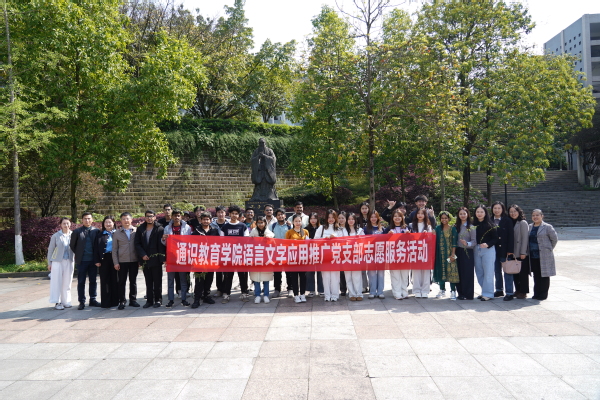
To help international students fully appreciate the charm of traditional Chinese culture and gain a deeper understanding of China’s national conditions, on the afternoon of March 31, the General Party Branch of the School of General Education organized a unique “Chinese Language + Traditional Culture” volunteer activity on national conditions education for international students (Qingming Festival) in Room E201 of Minxue Building. Fu Fei, Deputy Secretary of the School’s General Party Branch, and faculty members from the Party Branch for Language Application and Promotion attended the event. The event was hosted by Deng Chunmei, Associate Professor and lead instructor for the “Overview of China” course.
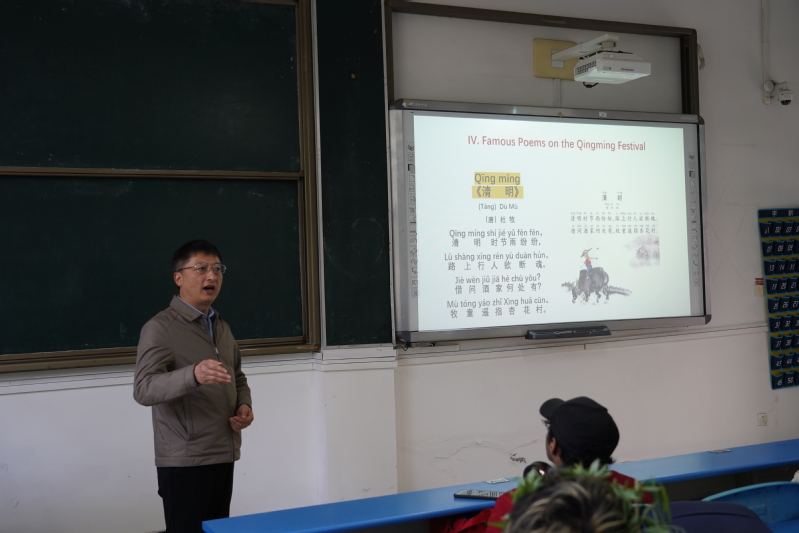
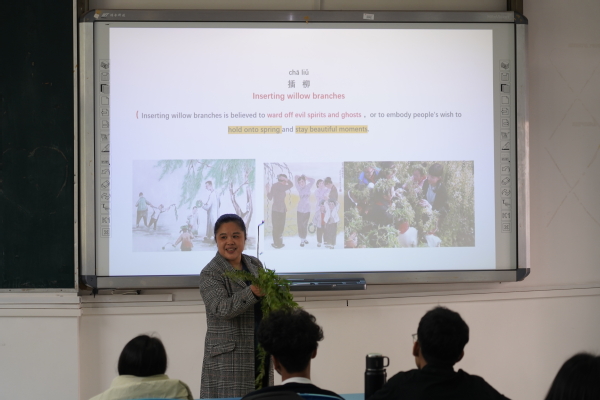
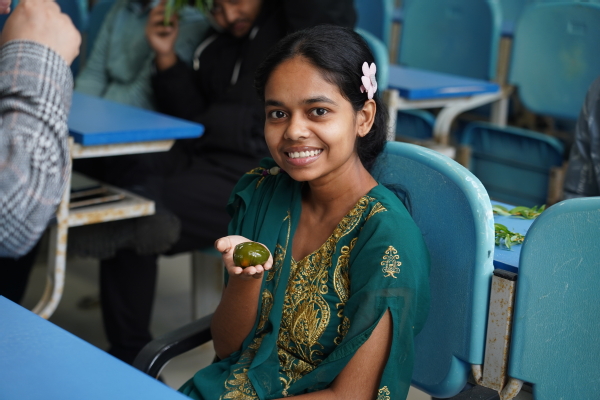
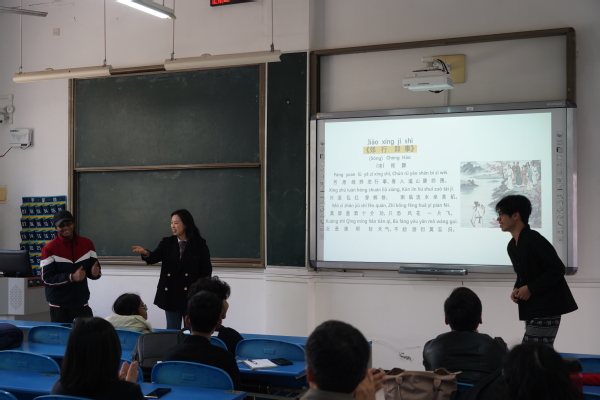
During the traditional culture sharing session, Deng Chunmei delivered a presentation titled “Approaching Qingming: Appreciating Tradition,” in which she shared traditional cultural knowledge about the Qingming Festival, including its origins, historical anecdotes, and customs. She also provided on-site guidance to student representatives as they demonstrated the festival custom of planting willow branches. During the classical poetry appreciation session, Fu Fei analyzed and recited the poem “Qing Ming” by the Tang Dynasty poet Du Mu; Gong Yuting, along with Laotian student A Long and Bangladeshi student Wang Xu, recited “Jiao Xing Ji Shi” by Cheng Hao, a Northern Song Dynasty educator and poet; Cai Dedu and Mou Li jointly recited “Qing Ming Ji Shi” by Qu You, a Ming Dynasty literary figure and poet. Finally, Wang Juan led all students in reciting “Chun Ri”, a masterpiece by the renowned Southern Song Dynasty poet Lu You. Accompanied by the melodious strains of classical Chinese music, the teachers distributed traditional Qingming pastries—qingtuan—to the international students one by one. As everyone savored Chinese cuisine and experienced traditional Chinese culture, it was as if they had stepped into spring and embraced nature.
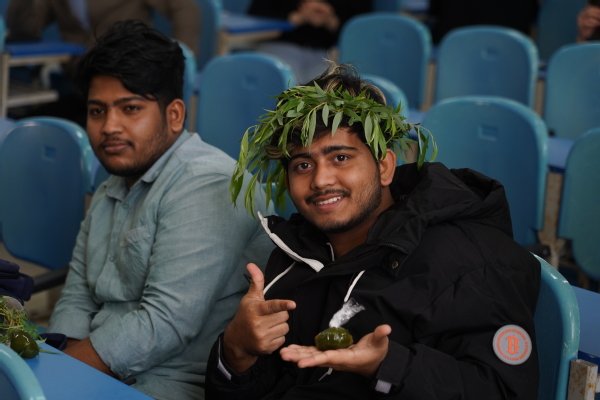
Through this activity, international students not only deepened their identification with China’s national conditions but also gained a more authentic, multidimensional, and comprehensive understanding of China. Next, the School of General Education will continue to innovate the formats of education on China’s national conditions, deepen educational themes, and enrich practical activities, thereby helping international students become ambassadors of friendship who understand, appreciate, and love China.