
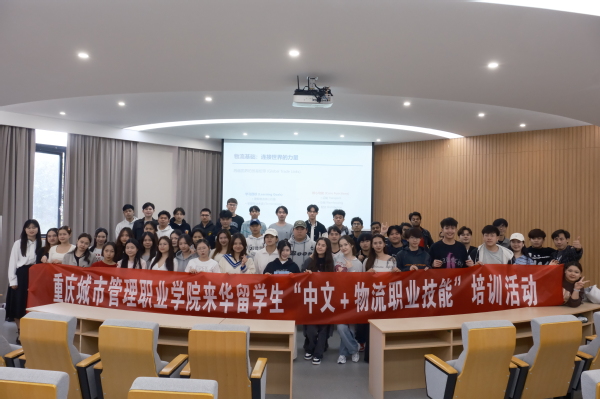
To further deepen the “Chinese Language + Vocational Skills” educational model, support the Belt and Road Initiative and the development of the New International Land-Sea Trade Corridor, and enhance the professional skills and overall competence of international students in China, the School of Business, in collaboration with the International Cooperation and Exchange Center and the School of General Education, organized a “Chinese Language + Logistics Vocational Skills” training program on April 21 and 28, 2026, providing training to a total of more than 50 international students.
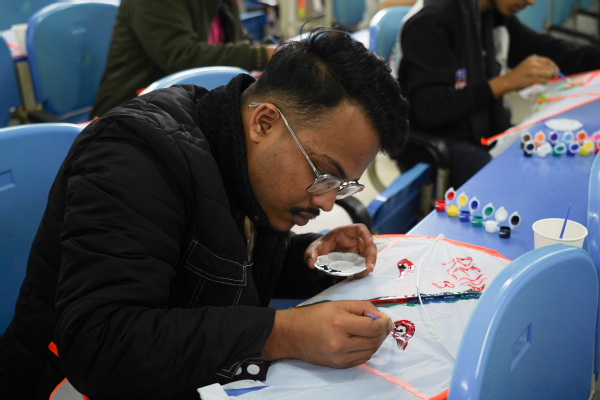
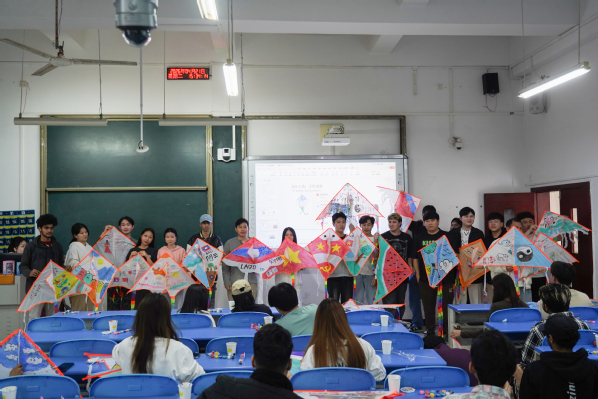
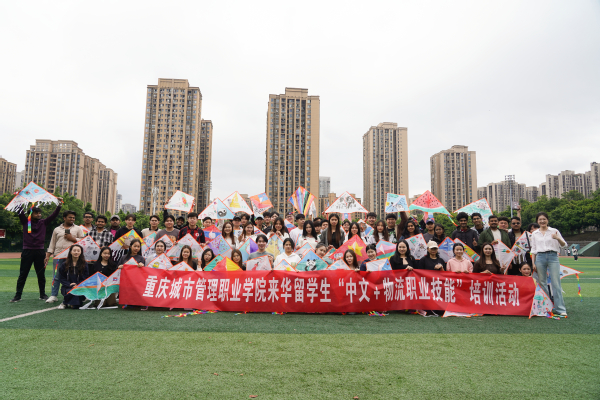
This training program had two modules designed around three key objectives: cultural immersion, language enhancement, and skill development. On April 21, the School of General Education organized a traditional culture experience activity for international students. It featured bilingual commentary explaining the origins and significance of kite culture, and included hands-on kite-making and outdoor kite-flying activities. They were aimed to help international students experience the charm of Chinese culture firsthand, while improving their Chinese language skills and cross-cultural communication abilities.
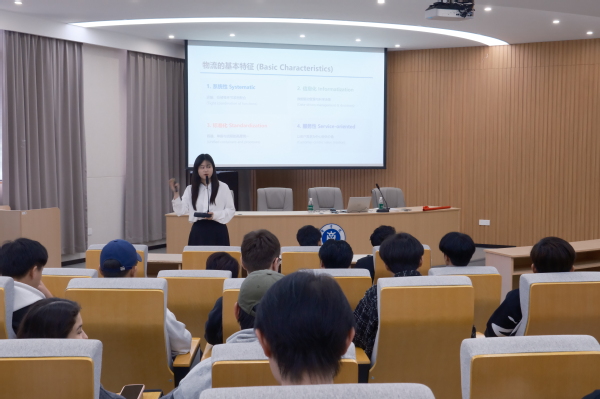
On April 28, the School of Business organized a vocational skills training session titled “Exploring the World of Logistics”. The training adopted a “theoretical instruction plus hands-on training” approach to help international students understand the fundamental theories and development trends of the logistics industry. Following the session, students visited the Smart Logistics Training Center, where they observed and operated equipment such as electric pallet trucks, AGVs (Automated Guided Vehicles), VR training systems, and autonomous delivery vehicles. This hands-on experience allowed them to gain firsthand experience to smart logistics technologies, thereby enhancing their practical logistics skills and professional adaptability.
This training program effectively integrates cultural dissemination, language learning, and skills training, providing international students in China with a platform for learning and personal growth while addressing the demand for international talent in Chongqing’s development as a national logistics hub. Moving forward, we will continue to refine the “Chinese Language + Vocational Skills” training system, enhance the quality of education for international students in China, and promote cultural exchange and economic cooperation between China and other countries.